


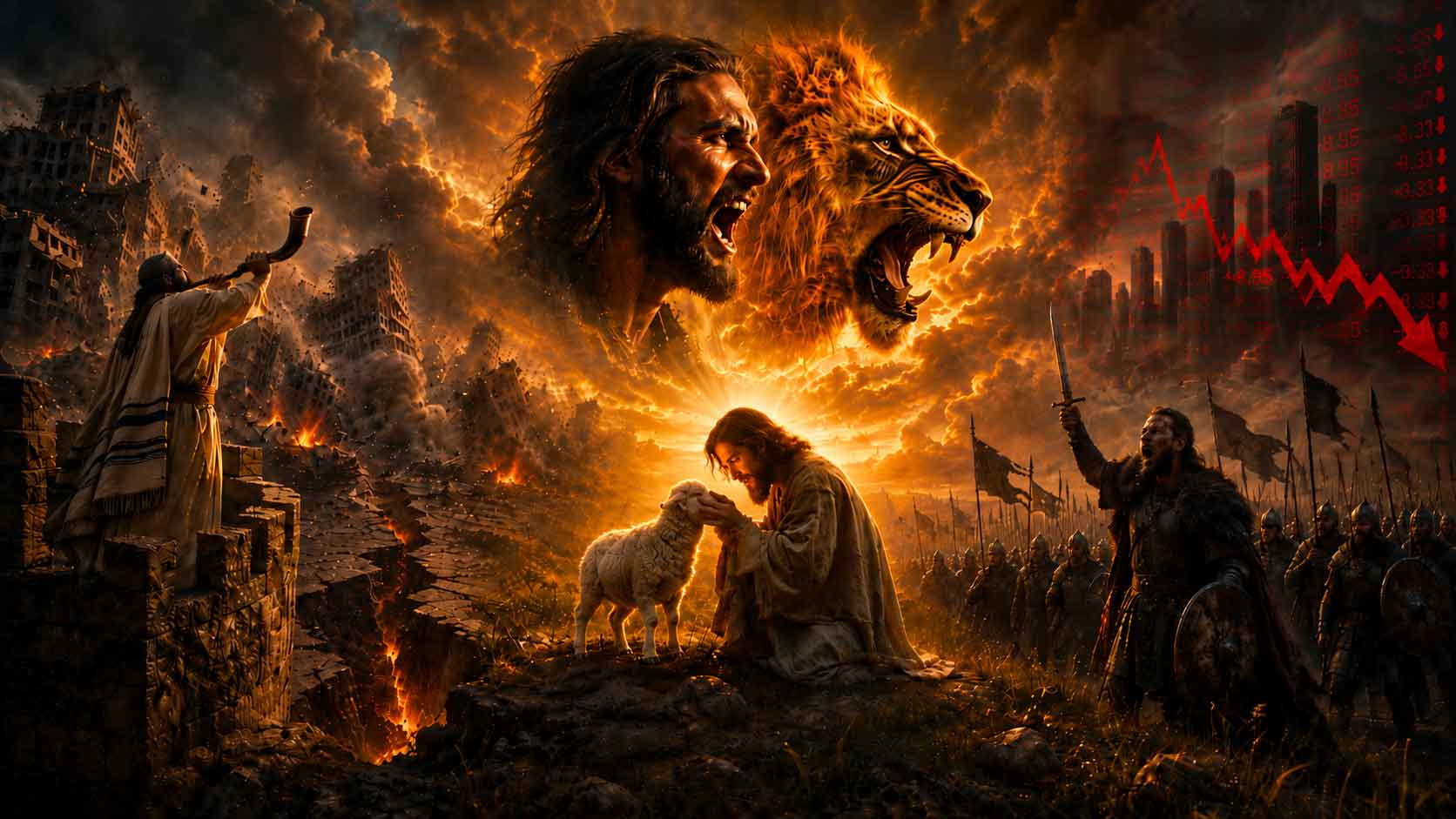

ELUL 5787: THE TRUMPET BETWEEN WAR AND PEACE
The King Is in the Field — Take Your Position
A Prophetic Message From Jerusalem
Let me speak to you as if you are standing right here with me, because in the Spirit this message is not about observing Jerusalem from a distance. It is about understanding the season we are standing in together. As Elul 5787 begins, the world does not feel quiet. It feels like a crossroads you can sense even before you can explain it. You can feel it in the headlines, in conversations, in the tension between nations, and in the strange reality that war and peace are being spoken in the same breath. Negotiations are happening while preparations for escalation continue.

The Middle East remains unstable. Ukraine and Russia remain locked in war while peace continues to be discussed. Economies are under pressure from debt, conflict, changing trade relationships, energy uncertainty, and technological transformation. Artificial intelligence is advancing at extraordinary speed, changing how humanity works, communicates, creates, and increasingly how we determine whether what we are seeing and hearing is even real. At the same time, creation itself is groaning through heat, fire, flood, and drought.
SOMETHING IS SHIFTING

The nations are shaking. Creation is groaning. Technology is accelerating. War and peace are being spoken simultaneously. And Jerusalem remains Jerusalem, a city that for thousands of years has stood at the intersection of prophecy, covenant, conflict, worship, and the purposes of YHWH, the apple of His eye. But Elul calls us away from the noise for a moment, away from headlines, panic, and speculation, and asks us to stop, listen, return, and discern. Because the greatest danger is not necessarily that we fail to recognize the signs. The greater danger is that we recognize every sign and still fail to recognize the voice of the King.
THE TRUMPET IS SOUNDING: TAKE YOUR POSITION
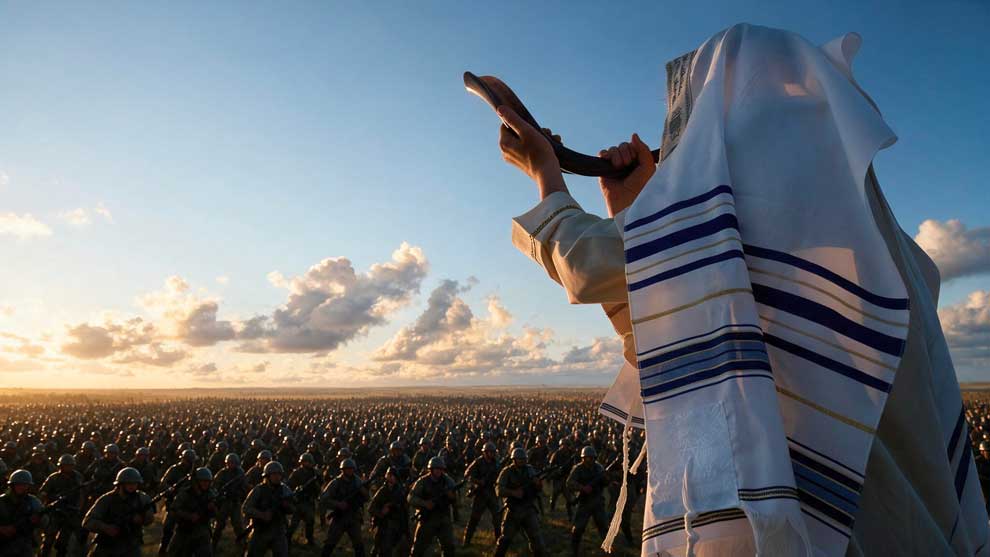
For years, the trumpet of Elul has carried a consistent message: repent, return, rebuild, prepare, repair what was broken, come out of hiding, and make way for the King. But this year something is changing within the sound. The trumpet is no longer calling us only to awareness. It is calling us to movement. To understand this, look at the people Scripture shows us at moments of transition. David had his cave. Nehemiah had his ruined wall. Esther had the doors of the king’s court. Isaiah had the throne room. Each one encountered a moment when preparation could no longer remain preparation. Eventually, they had to move.
TAKE YOUR POSITION

Nehemiah had to stop grieving over Jerusalem and begin rebuilding it. Esther had to stop preparing and walk into the king’s presence. Isaiah had TO MOVE from being cleansed to
being commissioned. Different generations, different circumstances, different assignments, but the same principle: encounter eventually demands obedience. Elul 5787 is asking us something deeply personal. You have prayed. You have watched. You have learned. You have survived. You have been corrected. You have been prepared. Now what will you do with it?
DO NOT BE AFRAID
Yeshua told His disciples that a time would come when they would hear of “wars and rumors of wars.” But what He said immediately afterward is essential: “See that you are not frightened” (Matthew 24:6). Yeshua was preparing His disciples for a world in which frightening events could easily become the focus. He did not tell them to pretend wars were not happening. He told them not to allow war to govern their hearts. That distinction matters. The existence of shaking does not mean YHWH has lost control. The throne is not shaking simply because nations are.

Psalm 2 paints an extraordinary picture. Kings gather. Rulers make plans. Nations rage. Human power appears enormous from the earth. But then Scripture suddenly changes perspective. Instead of looking from earth to heaven, we are allowed to see from heaven to earth. And the One seated on the throne is not panicking. He remains King.
The prophetic response to shaking is not panic. It is position.
PSALM 27: THE WARRIOR WHO WANTED ONE THING
Psalm 27 is traditionally associated with the season of Elul, and when we understand David’s story, its words become even more powerful. David knew warfare. He had faced Goliath when virtually everyone else was afraid. He had commanded armies. He had been hunted by King Saul. He had lived as a fugitive. He knew betrayal, rejection, and what it meant to wake up knowing someone wanted him dead. So when David writes, “YHWH is my light and my salvation—whom shall I fear? YHWH is the stronghold of my life—of whom shall I be afraid?” (Psalm 27:1), this is not poetry written by someone who never experienced danger. It is the testimony of someone who knew danger intimately but had discovered something greater than danger: the presence of YHWH.
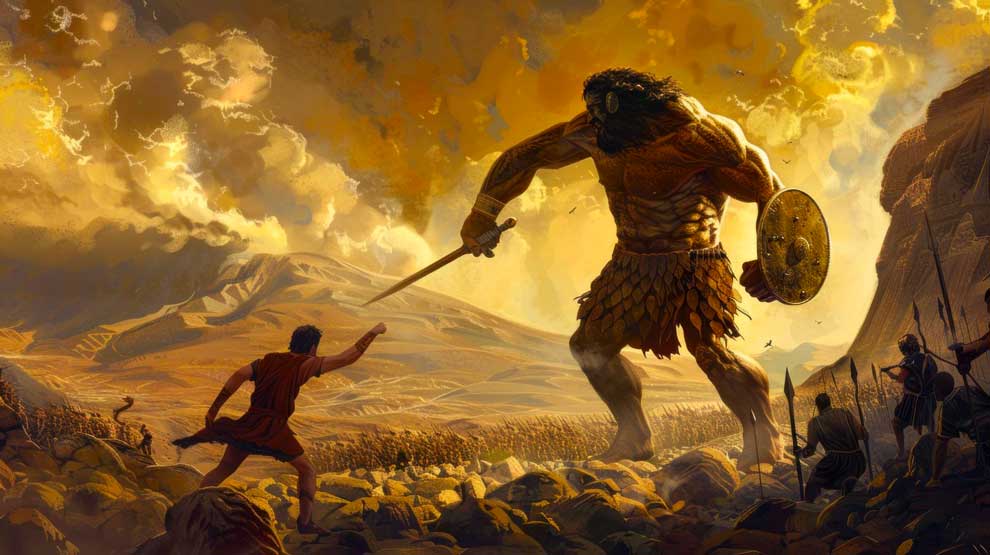
David continues, “Though an army encamp against me, my heart will not fear; though war arise against me, even then I will be confident” (Psalm 27:3). But then he says something surprising. With armies surrounding him, David does not ask first for a larger army, better weapons, or even the destruction of his enemies. He says, “One thing I have asked from YHWH… that I may dwell in the house of YHWH all the days of my life, to behold the beauty of YHWH” (Psalm 27:4).
One Thing
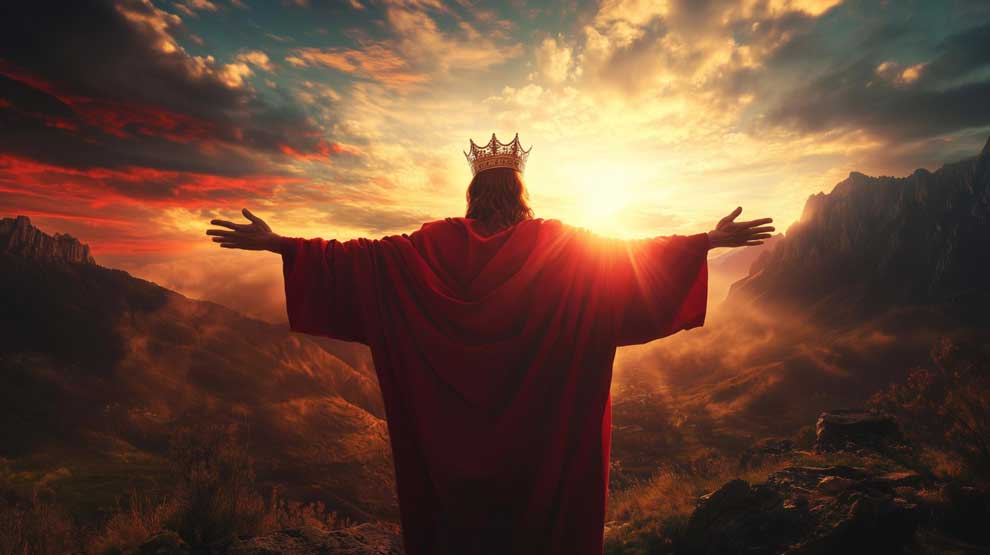
This is the secret. The warrior’s strength did not come from obsession with warfare. It came from fascination with the King. The world is offering us a thousand things to fear and ten thousand things to watch, but David brings us back to one thing: His presence, His face, His voice, His beauty, His Kingdom. Before asking what the nations are doing, ask, “YHWH, what are You doing?” Before studying what the enemy may be planning, ask, “Where is Your presence leading me?” Before searching for another prophetic interpretation, seek His face.
This is Elul.
YOU ARE NOT JUST WATCHING HISTORY — YOU ARE IN IT
It is easy to look at wars, governments, economies, technology, and global events and feel like a spectator watching history unfold. But Scripture never presents the people of God as spectators. Joseph was positioned inside Egypt during famine. Daniel was positioned inside Babylon while empires changed. Esther was positioned inside Persia during a threat against her people. Nehemiah served inside the Persian government before being sent to rebuild Jerusalem. The apostles were positioned inside the Roman world when the Gospel began spreading to the nations.

None of them controlled the empire around them, but each carried the Kingdom of YHWH within the sphere where God had positioned them. That changes the question. Instead of asking only, “What is happening to the world?” we should also ask:
Why has God positioned me here while it is happening?
You carry something the world desperately needs. When systems shake, carry peace. When confusion increases, carry truth. When fear spreads, carry faith. When hatred grows, demonstrate forgiveness. When people become divided, become a peacemaker. Your peace is not merely an emotional state.
Your peace has a Name: Yeshua.
ESTHER: THERE COMES A MOMENT TO WALK THROUGH THE DOOR
Esther’s story is especially important for understanding what “Take Your Position” means. Esther was a young Jewish woman living in the Persian Empire. Through circumstances she could never have orchestrated herself, she became queen. Then a powerful official named Haman devised a plan that threatened the Jewish people. Esther’s cousin Mordecai sent her a message that essentially said she could not assume that because she was inside the palace she would escape what was coming upon her people. Then came the famous question: “And who knows whether you have attained royalty for such a time as this?” (Esther 4:14).

Esther faced a terrifying decision. Approaching the king without being summoned could mean death. So she called for a fast. She prepared spiritually. But fasting was not the final assignment. Eventually Esther had to get up, put on her royal robes, and walk through the door.
She said, “If I perish, I perish.”
Preparation must eventually become obedience.
Some of us have been fasting about things we already know we must eventually walk into. Prayer prepares us for obedience. It does not replace obedience. There comes a moment when Esther must enter the court. There comes a moment when you must walk through the door.
TRUTH IN THE AGE OF ARTIFICIAL INTELLIGENCE
We are entering a world previous generations could scarcely have imagined. Words can be generated. Voices can be replicated. Images can be fabricated. Videos can increasingly present things that never happened. Truth can be imitated convincingly and distributed globally almost instantly. Yet Yeshua’s first warning when His disciples asked Him about the signs of the times was, “See that no one misleads you” (Matthew 24:4).
Before wars, before famines, before earthquakes… deception.

That should get our attention. Our defense cannot simply be having more information because information itself can be manipulated. Our strength must be discernment rooted in intimacy. Yeshua said, “I am the way, and the truth, and the life” (John 14:6). We are not merely called to recognize true statements; we are called to know Truth Himself.
Slow down, test everything, refuse rumor culture. Do not share something simply because it agrees with what you already believe. Do not call something prophetic merely because it sounds dramatic. Do not confuse virality with revelation. Know Scripture, His character, and His voice.
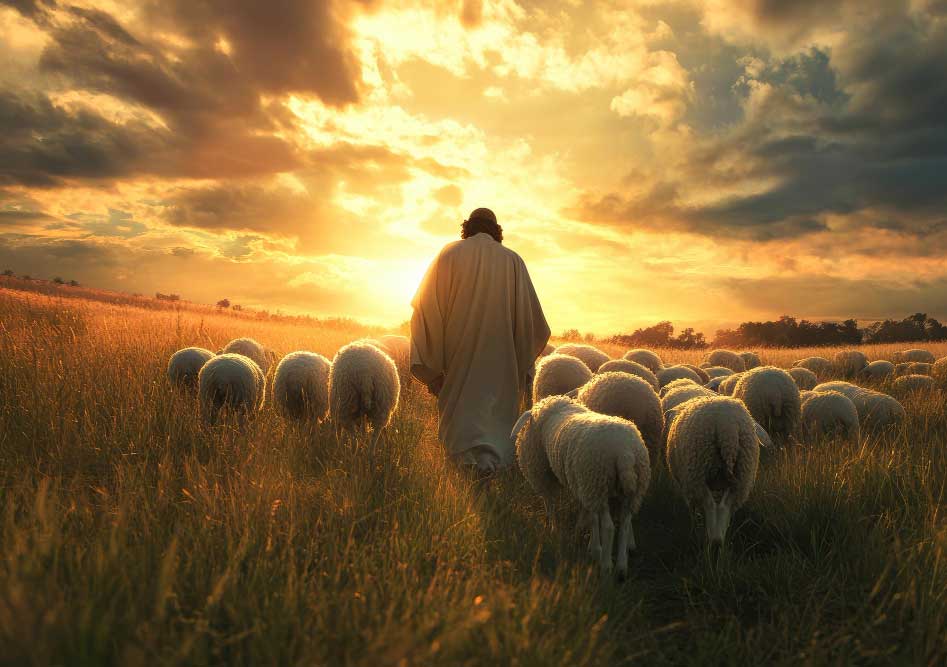
The sheep recognize the Shepherd.
YOU ARE AN AMBASSADOR — NOT A SPECTATOR
Romans 8 tells us that creation groans, but it does not describe creation groaning toward meaningless destruction. It speaks of creation longing for liberation and redemption. This changes how believers respond to crisis. We are not called to stand at a distance saying, “Look how terrible everything is.” We are called to enter suffering carrying another Kingdom.
Yeshua repeatedly did this. Where there was hunger, He fed people. Where there was sickness, He healed. Where there was shame, He restored dignity. Where there was demonic oppression, He brought freedom. Where religious people saw sinners, He saw people worth reaching. Where others saw death, He brought resurrection.

We are ambassadors of redemption.
When communities suffer, show up. When people are hungry, feed them. When people are afraid, carry shalom. When hatred spreads, love your enemies. When people lose hope, preach the Gospel. The darker the night becomes, the more visible light becomes.
THE KING IS IN THE FIELD — AND HE IS NEAR
There is a beautiful Hebrew tradition associated with Elul: “The King is in the field.” Imagine an ancient king. Most of the year he is inside his palace and to approach him requires protocol, access, and permission. But during a particular season the king leaves the palace and travels through the fields where his people are working. Suddenly, the farmer does not need to enter the palace. The king has come near.
This traditional picture became associated with Elul as a season of drawing near to God before the High Holy Days. For believers in Yeshua, the picture points toward an even greater reality. Through Yeshua, the veil separating humanity from the Holy of Holies has been torn. Hebrews tells us that Yeshua is our eternal High Priest and that through Him we can approach the throne of grace boldly because the King has made a way for us to come near.
The traditional Hebrew association with the letters of Elul points us toward Song of Songs: “Ani l’dodi v’dodi li”—“I am my Beloved’s and my Beloved is mine” (Song of Songs 6:3). Before assignment, before warfare, before calling, before prophecy, there is love. This matters because without intimacy, assignment becomes ambition. Without intimacy, warfare becomes anger. Without intimacy, prophecy becomes information. Without intimacy, ministry becomes performance.
Before the King tells you where to stand, He reminds you: You are Mine.
GAD: WHY THEIR FACES WERE LIKE LIONS
The tribe traditionally associated with Elul is Gad. To understand why Gad matters, we must go back to Jacob. Before Jacob died, he prophetically blessed his sons. Concerning Gad he declared, “Gad, a troop shall press upon him, but he shall triumph at last” (Genesis 49:19). In other words, you will experience pressure, but pressure will not have the final word.
Generations later, descendants of Gad became famous warriors. When David was still in his wilderness stronghold, Gadite warriors crossed over to join him. Scripture describes them as “men trained for war, who could handle shield and spear, whose faces were like the faces of lions, and who were as swift as gazelles on the mountains” (1 Chronicles 12:8). These men understood hardship. Their identity had been formed with the expectation that resistance would come. Therefore resistance did not automatically convince them they were defeated.

Sometimes believers assume, “If God called me, why is this difficult?” Gad teaches another possibility.
Difficulty does not necessarily mean you missed God.
Sometimes resistance exists because there is territory to inherit. But “faces like lions” does not mean angry believers in Yeshua! The world already has enough anger. We need something much rarer: unafraid believers. Tender before YHWH. Fearless before darkness, humble before people, uncompromising before deception, merciful towards our enemies, and ferocious against lies.
Faces like lions. Hearts surrendered like lambs.
NEHEMIAH: FROM WEEPING TO BUILDING
When we speak about Nehemiah rebuilding Jerusalem’s walls, it helps to understand the situation. Jerusalem had been devastated by Babylon. Its walls were broken and its gates had been burned. Even after Jewish exiles began returning, the city remained vulnerable and disgraced. Nehemiah was not originally a military commander or construction manager. He was cupbearer to the Persian king, a trusted position inside the royal court.
Then Nehemiah received news about Jerusalem. The walls remained broken. And the gates remained burned. Scripture says he sat down and wept, then mourned, then fasted and prayed. But Nehemiah did not stay in prayer forever. His prayer produced an assignment.
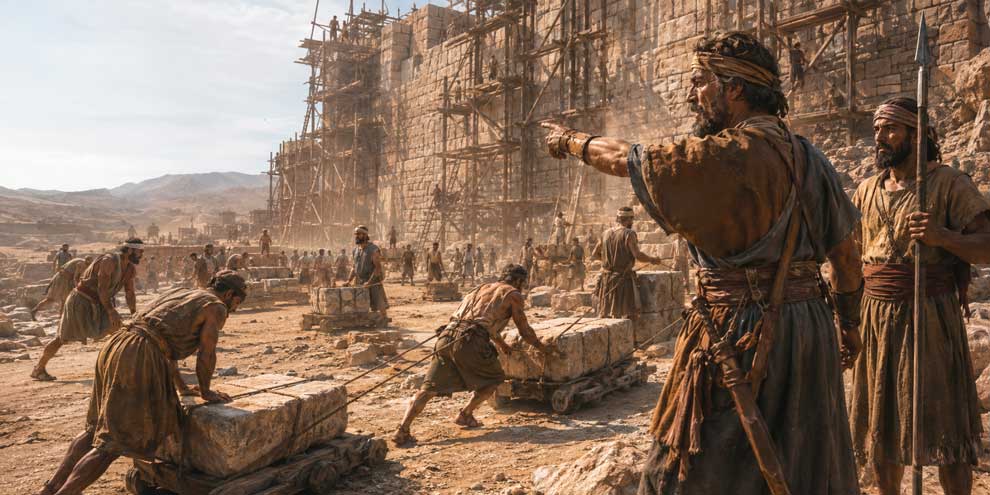
The Persian king eventually gave him permission to go to Jerusalem. When Nehemiah arrived, he secretly inspected the broken walls at night. He assessed the damage before announcing the plan. Then he organized families and workers to rebuild different sections of the wall. Opposition came quickly. They were mocked, threatened, and conspired against. The pressure became so serious that Nehemiah 4 describes workers carrying materials while remaining armed.
Builders became watchmen, and workers became warriors with sword and hammer in hand.
And despite years of ruin, the wall was completed in only 52 days, on the twenty-fifth day of Elul (Nehemiah 6:15). What had been broken for generations changed in less than two months once God’s people aligned around the assignment.
Do not confuse a long delay with a permanent condition.
But also understand the lesson. Nehemiah prayed, planned, organized, then he built. Prayer was not an alternative to action. Prayer produced heavenly strategy for action.
WATCHMEN: WHY THE WALL STILL NEEDED PEOPLE
Finishing Jerusalem’s wall did not mean the assignment was finished. A wall without guarded gates could still be penetrated, so Nehemiah appointed gatekeepers, Levites, singers, and guards. Isaiah gives us another powerful image: “On your walls, O Jerusalem, I have appointed watchmen; all day and all night they will never keep silent” (Isaiah 62:6).
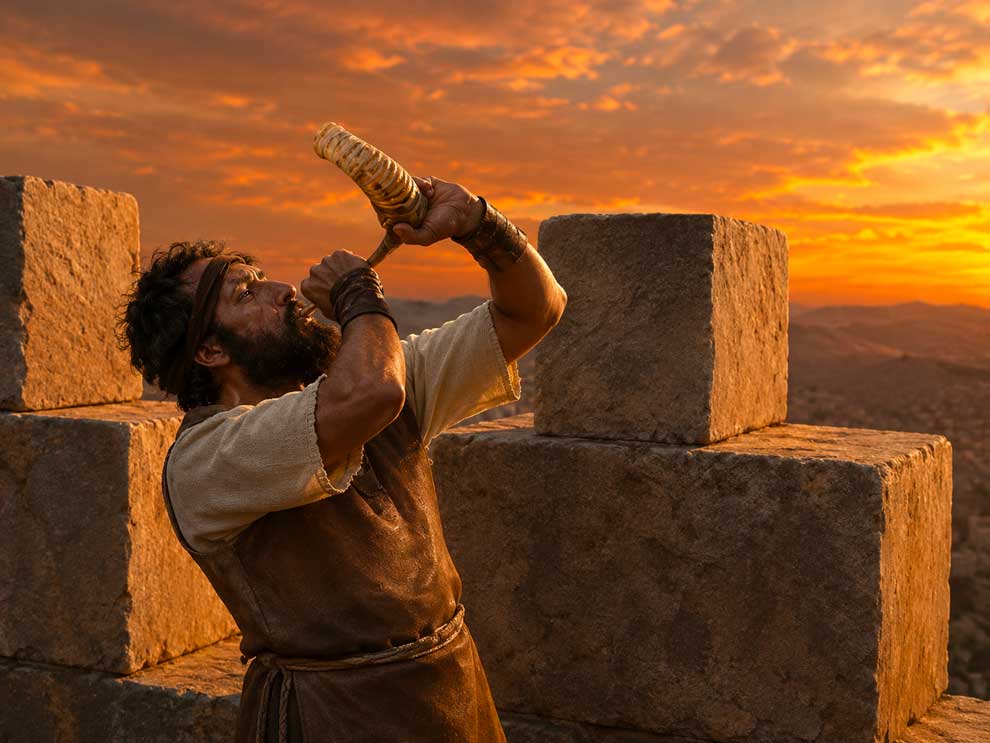
In the ancient world, a watchman stood at an elevated position on the city wall. He watched the horizon. If danger approached, he sounded the alarm. If messengers approached, he identified them. The city might be sleeping, but the watchman remained awake. This is why the image is so powerful spiritually. A watchman sees beyond himself.
Some are watchmen over families. Some over businesses. Some over governments. Some over agriculture and food systems.
Some over technology, education, media, humanitarian work, prayer rooms, Israel, or the nations. Different walls, different gates, different assignments.
One King
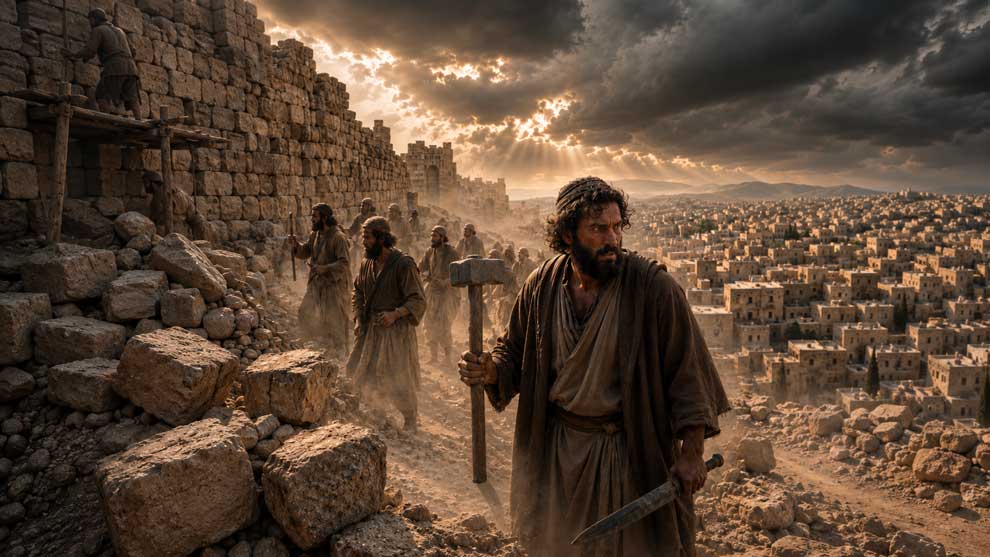
Do not abandon your section of the wall because someone else’s looks more important. Nehemiah did not need everyone repairing the same gate. He needed everyone faithful to their assigned position.
ISAIAH: BEFORE “SEND ME” CAME “WOE IS ME”
We often quote Isaiah saying, “Here am I. Send me!” But those words become much more powerful when we understand what happened immediately before them. Isaiah saw a vision of YHWH seated upon His throne. The temple was filled with His glory. Seraphim cried, “Holy, holy, holy is YHWH of hosts; the whole earth is full of His glory.” The foundations shook. The temple filled with smoke.
Isaiah’s first response was not, “Finally, God is going to use me.” His response was, “Woe is me, for I am ruined! Because I am a man of unclean lips.” Encounter with God’s holiness produced awareness of what needed cleansing. Then one of the seraphim took a burning coal from the altar and touched Isaiah’s lips. His guilt was removed. His sin was atoned for.
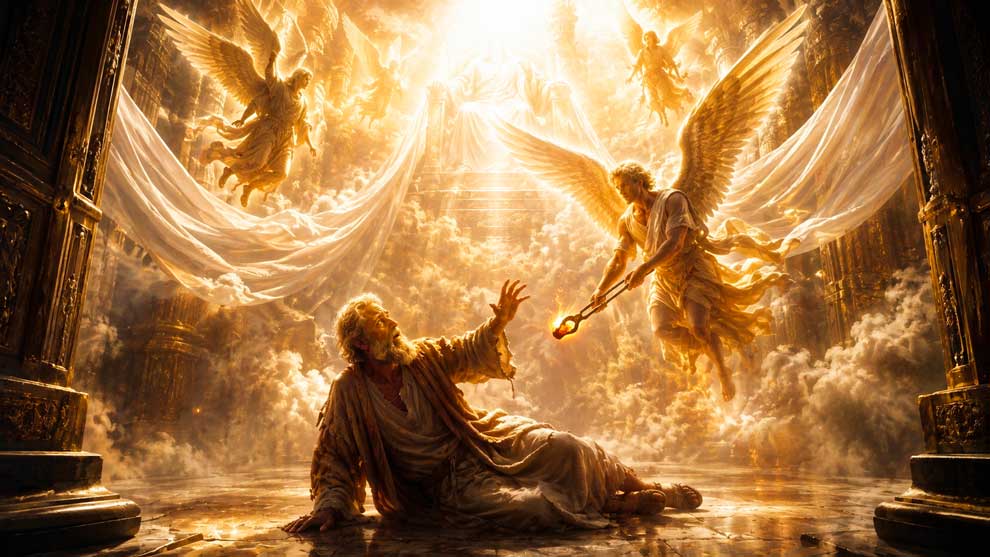
Only after cleansing did Isaiah hear heaven ask, “Whom shall I send, and who will go for Us?” Then Isaiah answered, “Here am I. Send me.”
Encounter, Repentance, Cleansing, Assignment.
We often want assignment without consecration. Elul reverses the order. Before asking God, “Where are You sending me?” ask, “What needs to be surrendered in me?”
THE TRUMPET: WHY THE SHOFAR MEANS MORE THAN A SOUND
Throughout Elul the shofar is traditionally sounded, but biblically, trumpets were not musical background; they communicated. Numbers 10 describes trumpet blasts used to gather Israel. One sound assembled leaders. Another mobilized the camps. Trumpets announced appointed times. They accompanied celebration. They also sounded alarms when enemies approached.
The sound required a response.
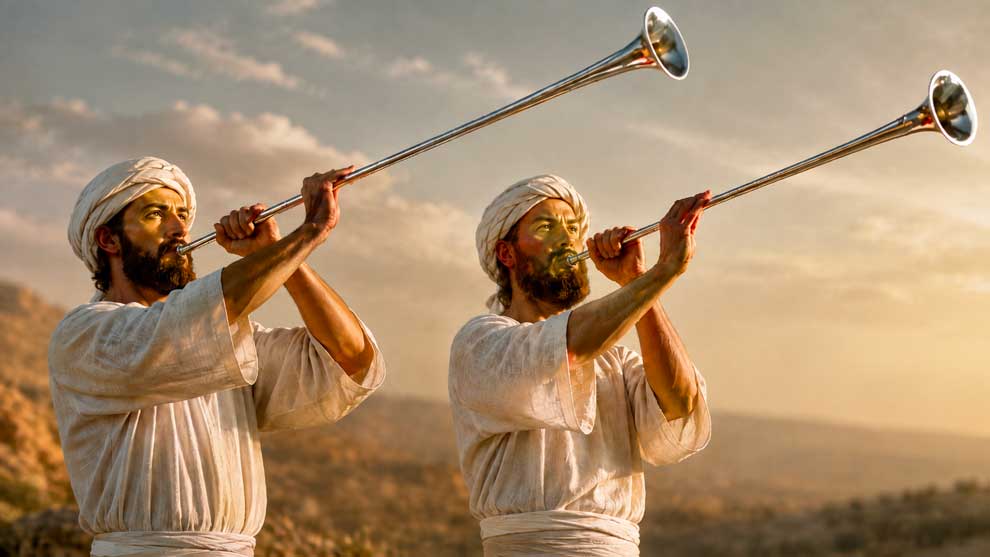
You did not hear the trumpet and simply say, “What a beautiful sound.” You understood that something was happening. Perhaps that is the prophetic transition of Elul 5787. For years we have heard, “Wake up.”
Now perhaps the sound is: MOVE!
Some of us have prayed about the same assignment for years. We asked for confirmation, God confirmed it, then we asked for another confirmation and another. Eventually another request for confirmation can become an excuse for delaying obedience.
The trumpet has sounded! Take your position.
ELUL 5787 — YOU ARE IN THE MIDDLE OF THE STORY
So here we stand, between war and peace, between extraordinary technological advancement and unprecedented possibilities for deception, between global instability and extraordinary opportunities for the Gospel, between the cave and the palace, between broken walls and rebuilt gates, between cleansing and commissioning, and between hearing the trumpet and responding to it.

Perhaps this is why you are alive now. Not accidentally, not merely to watch, but to carry the Kingdom into your generation. Do not fear, do not drift, and do not delay. Now is not the time to shrink back or allow headlines to disciple you. Beware, do not become fascinated with prophecy while neglecting the Prophet, Priest, and King.
RETURN TO YOUR FIRST LOVE
Seek His face, repair the breach, forgive completely through the perfect love of the Father and put your house in heavenly order. Now is the time to fill your lamp with oil and to pick up the hammer and the sword. Will you stand on your wall and love your enemies, serve those who suffer and preach Yeshua?
And when heaven asks:
“WHOM SHALL I SEND?”
Let your life answer:
HERE AM I. SEND ME.
Because now you understand the stories. David did not remain in Adullam. Esther did not remain outside the court. Nehemiah did not remain weeping over the ruins. Isaiah did not remain standing before the altar. The Gadites did not remain in the wilderness.
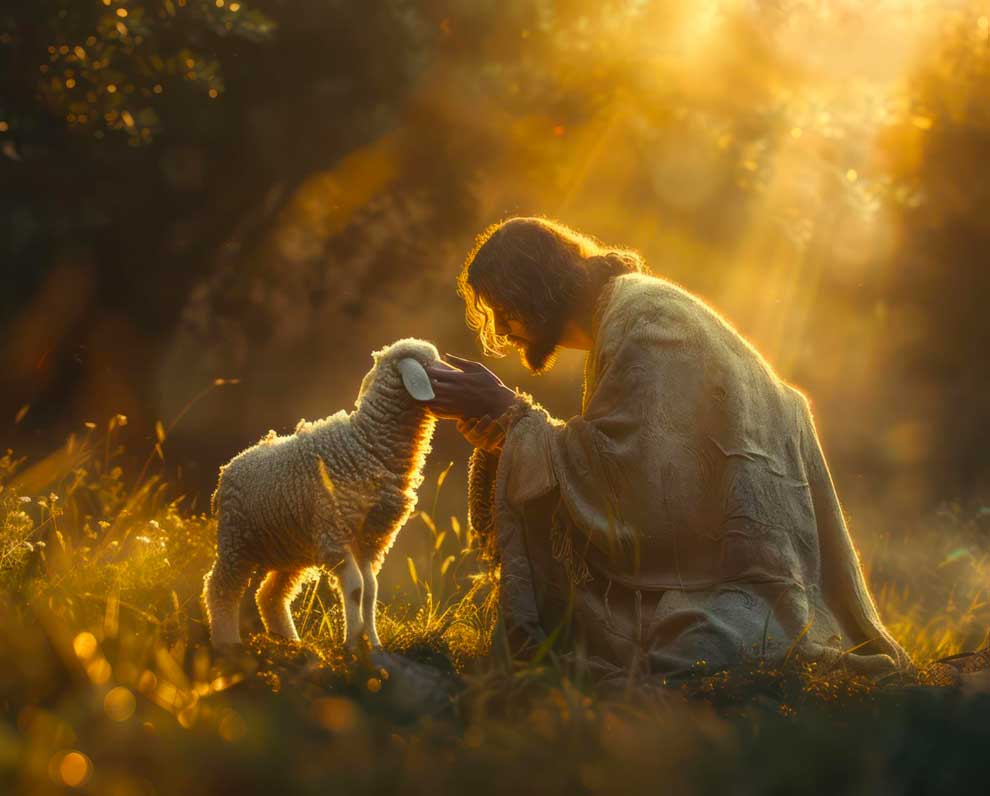
They moved when their moment came.
And now the trumpet is sounding again.
The cave has served its purpose.
The walls are rising.
The watchmen are taking their positions.
The harvest is ready.
The Bride is making herself ready.
And the shofar declares:
THE KING IS IN THE FIELD.
TAKE YOUR POSITION.
Ani l’dodi v’dodi li.
I am my Beloved’s and my Beloved is mine.
“YHWH is my light and my salvation—whom shall I fear?”
YHWH bless you and keep you, Kingdom family! YHWH make His face shine upon you and be gracious to you. YHWH lift up His countenance upon you and give you shalom.
Arise, victorious Bride.
MAKE WAY FOR THE KING!

 English
  Spanish
  Portuguese
  Korean
  Chinese
  Indonesian
  Russian
  French